 Monster Hunter Wilds
Monster Hunter Wilds Guardian Doshaguma Beginner Guide
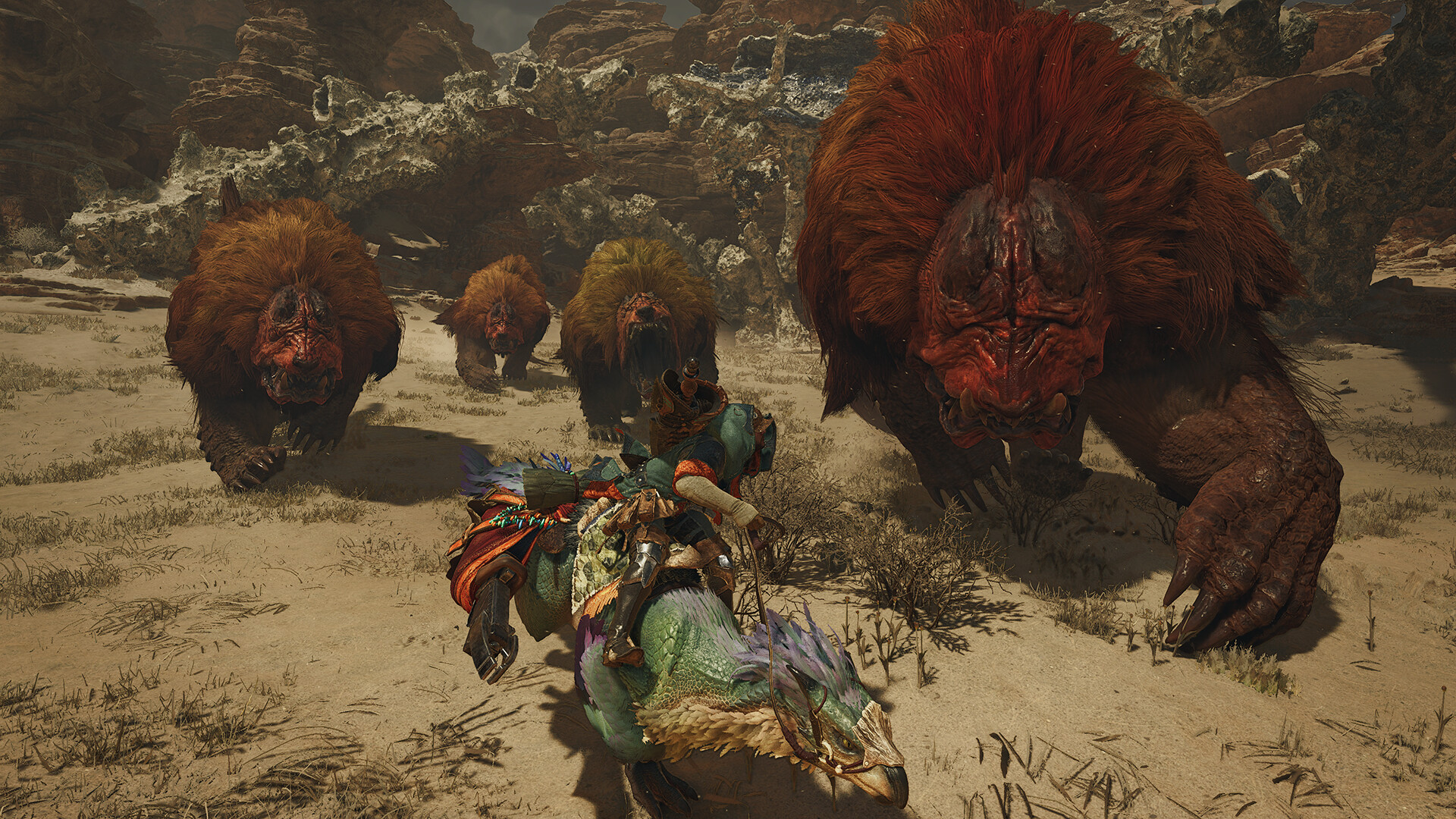
Quick Answer: Monster Hunter Wilds Guardian Doshaguma is a tough early-to-mid game wall that teaches positioning, elemental preparation, and resource discipline; beat it by upgrading gear early, learning its charge windows, and punishing recovery openings.
Monster Hunter Wilds is a 2025 action role-playing game developed and published by Capcom Source, and it launched worldwide for PlayStation 5, Windows, and Xbox Series X/S with cross-platform play on February 28, 2025 Source. If Guardian Doshaguma is giving you trouble, the solution is usually not “hit harder” but “prepare better”: bring the right items, improve your armor, learn when it commits to movement, and stop wasting stamina and healing on unsafe openings.
What Guardian Doshaguma teaches new players
Guardian Doshaguma teaches new players how Monster Hunter Wilds expects you to think in combat: observe first, commit second, and treat every hunt like a resource test. This monster is an excellent beginner filter because it punishes over-aggression, catches sloppy healing, and rewards players who use the full toolbox instead of just mashing attacks.
In practical terms, Guardian Doshaguma is the kind of target that forces you to notice three things at once:
- Movement patterns: forward rushes, turning attacks, and follow-up swipes.
- Space management: whether you are standing in front of it, beside it, or behind it after a dodge.
- Recovery windows: the brief moments after a charge, knockdown, or missed lunge when you can safely attack.
If you are coming from simpler action games, this can feel harsh at first. A great example is when a player tries to stay glued to the monster’s head with a heavy weapon and gets clipped by a sudden repositioning charge. Another example is an aggressive Dual Blades user burning stamina to maintain pressure, then getting punished because there is no stamina left for a real dodge. A third example is a Great Sword player charging a big hit from a bad angle and landing it only to eat an immediate retaliation.
The beginner lesson is that Guardian Doshaguma is not asking for perfect execution; it is asking for disciplined habits. You do not need advanced speedrun routing or a meta build to clear it. You need enough armor to survive mistakes, enough items to recover from mistakes, and enough patience to wait for the monster’s real openings instead of inventing your own.
For that reason, treat this hunt as your first serious “systems check.” If you can beat Guardian Doshaguma cleanly, you are already learning the core loop that will matter against later threats. If you cannot, that is usually a sign that your preparation, not your reflexes, is the real problem.
First-hour checklist for Guardian Doshaguma prep
Your first hour should focus on unlocking stability, not chasing fancy damage. The best early routine is to secure basic survivability, collect essential materials, and make sure your hunt flow is smooth before you ever re-queue against Guardian Doshaguma.
1) Upgrade your armor before chasing damage
Your first priority should be armor upgrades or equivalent early survivability improvements, because one extra mistake often matters more than a small damage increase. In beginner hunts, surviving an extra hit can be the difference between learning the monster and failing the quest timer through repeated faints.
Practical examples of what this means:
- If you have a choice between a small attack boost and a larger defensive bump, take the defensive bump first.
- If your current set has obvious weak points against being knocked down or chunked by physical hits, fix that before worrying about optimal damage skills.
- If your weapon choice is comfortable but your armor is paper-thin, stay with the comfortable weapon and stabilize your gear instead of switching to a “better” weapon you cannot use well yet.
2) Stock up on core hunt items
Your first hour should also be spent making sure you are never underprepared for healing and repositioning. Even in early game, the difference between a clean hunt and a disaster often comes down to whether you brought the basics.
Use this practical shopping and crafting mindset:
- Carry your full healing set whenever the game allows it.
- Keep movement and recovery items topped up rather than waiting until you are empty.
- Craft or restock anything that directly prevents a failed hunt from becoming a long reset.
Useful examples include carrying enough healing to recover from one bad trade, keeping traps or capture tools ready if the quest flow allows them, and making sure you are not entering the hunt with no backup supplies because you “want to save them.” Saving items you never use is not efficient; surviving and learning is.
3) Practice one weapon’s core loop
Your first hour is the wrong time to experiment with five weapons at once. Pick one weapon you can control under pressure and learn its safest punish windows against smaller targets before facing Guardian Doshaguma again.
Good beginner practice patterns include:
- A fast weapon where you can easily reposition after a whiff.
- A mid-speed weapon with clear punish timing.
- A defensive or counter-oriented weapon if you prefer playing reactively.
Examples of healthy practice goals:
- Land one or two safe hits, then disengage instead of overcommitting.
- Roll or reposition after every failed attack string.
- Learn which attacks can be canceled or shortened so you do not get stuck in long animations.
4) Re-check your controller, camera, and target settings
Your first hour should include fixing any control friction that makes aiming, evading, or locking on feel awkward. Many beginner failures come from bad camera habits rather than bad mechanical skill.
Before the next Guardian Doshaguma attempt, make sure you can:
- Keep the monster visible during sideways movement.
- Recenter your view quickly after dodging.
- Swap targets or disengage from lock-on without confusion.
This matters because a monster like Guardian Doshaguma often punishes players who lose track of its body during the exact moment they need to react. If your camera drifts and you cannot tell whether it is charging, turning, or pausing, your dodge timing becomes guesswork.
5) Test your route to the hunt
Your first hour should also be about reducing downtime between attempts. A smoother setup means more actual learning per hour and less frustration.
Check whether you can do the following without hesitation:
- Restock before the quest.
- Upgrade gear from your current materials.
- Craft common consumables quickly.
- Reach the hunt start with a consistent routine.
That efficiency pays off because Guardian Doshaguma is much easier to learn when you can run several attempts in a row and compare what went wrong.

You might also like
- Monster Hunter Wilds Beginner Guide
- Monster Hunter Wilds Beginner Guide
- Monster Hunter Wilds Beginner Guide: Getting Started Fast
- Monster Hunter Wilds Beginner Guide
- Monster Hunter Wilds No More Mister Ice Guy 8/19 8/26 Beginner Guide
Resource priority order for beginners
Your resource priority order should be survival first, convenience second, and damage third. If you spend early materials in the wrong order, you will feel permanently underpowered even when the issue is actually that your inventory and armor are lagging behind.
Recommended early priority list
| Priority | Spend on first | Why it matters for Guardian Doshaguma | Example of a smart early use |
|---|---|---|---|
| 1 | Armor and defensive upgrades | Lets you survive learning mistakes and recover from bad trades | Upgrading the set you already use instead of hoarding materials |
| 2 | Healing and survival items | Prevents one mistake from ending the run | Restocking before every serious attempt |
| 3 | Weapon comfort improvements | Improves consistency more than raw damage for new players | Using a weapon you can control well rather than a stronger one you misplay |
| 4 | Utility crafting materials | Supports repeated hunts and smoother progression | Making basic tools or carry items when the game opens that route |
| 5 | Damage optimization | Matters later, once your survival baseline is stable | Tuning offense after you stop fainting often |
The key idea is that beginner progression is a stability problem. A player who survives longer learns more, and a player who learns more makes faster progress than someone who keeps chasing damage and failing early. That is especially true against Monster Hunter Wilds Guardian Doshaguma, because your first real damage gains come from punishing the monster correctly, not from squeezing out a tiny stat increase.
What to hoard
You should hoard anything that is hard to replace or directly supports progression. That usually includes monster-specific parts, upgrade materials, rare consumables, and any item that has a clear future use beyond a single hunt. A common beginner trap is turning valuable early components into short-term gains and then realizing later that the same material would have unlocked a better weapon or armor piece.
A few practical examples:
- Keep rare drops until you know whether they are needed for a weapon line or armor upgrade.
- Save limited consumables for quests where failure would set you back more than usual.
- Do not burn materials on marginal upgrades if you still have glaring defensive weaknesses.
What to craft first
The first things you should craft are usually items that increase consistency rather than items that merely raise peak damage. For most beginners, that means healing support, stamina or movement support if available, and basic hunt utility.
A good way to think about it is:
- Craft first: things you will use almost every hunt.
- Delay: niche items for advanced tactics you have not learned yet.
- Avoid early: anything that only helps if you already play perfectly.
For example, if your current problem is fainting to Guardian Doshaguma’s pressure, a minor damage item is less useful than a tool that lets you recover, reposition, or continue the hunt safely. The same logic applies to weapon choices: a simpler weapon that helps you survive is often a better early investment than a flashy one that drains your stamina and awareness.
Common mistakes beginners make against Guardian Doshaguma
The most common beginner mistakes are predictable, fixable, and usually caused by trying to play too aggressively too early. If you recognize one of these habits in your own hunts, the answer is not to “get better” in the abstract; it is to change one concrete behavior on the next attempt.
Mistake 1: Healing too late
Players often wait until they are one hit from fainting because they want to squeeze in “just one more attack.” This happens because Monster Hunter rewards aggression, so beginners naturally overestimate how much time they have.
Fix: heal after a safe disengage, not after panic damage. If Guardian Doshaguma has just completed a charge, swipe, or turn, move out first and then heal from a safe angle. If you are unsure whether it will follow up, assume it will and keep moving.
Mistake 2: Attacking after every dodge
Many new players treat every successful dodge as permission to swing immediately, even when the monster is still recovering into another action. The result is trading into a fast follow-up and losing the advantage they just earned.
Fix: use a dodge to create space, then read the monster’s posture before attacking. Against Guardian Doshaguma, look for genuine commitment errors such as a missed rush, a turn that overshoots, or a brief pause after landing. If you only have time for one safe hit, take one safe hit.
Mistake 3: Chasing the head at all costs
Beginners love the head because it looks like the best damage target, but not every position is worth forcing. This mistake usually comes from damage obsession or from copying advanced players who already know how to keep perfect spacing.
Fix: hit the safest body part you can reach consistently. If the side or rear gives you a clean opening while the head is dangerous, choose the safe hit and stay alive. For many early clears, consistent damage on a safer angle beats risky head-sniping.
Mistake 4: Entering the hunt undergeared
A lot of players attempt Guardian Doshaguma with outdated armor because they assume skill alone should carry the fight. That mindset often comes from other action games where raw dodging can compensate for weak gear.
Fix: upgrade your equipment before repeatedly retrying. If a single attack is deleting a huge chunk of your health, stop treating the fight as a skill check and treat it as a gear check. Improve your armor, then come back.
Mistake 5: Burning stamina recklessly
Stamina misuse is one of the biggest reasons beginners get trapped. They sprint too long, dodge too often, or overextend with long attack strings and then have nothing left when the monster actually commits.
Fix: keep a stamina reserve for defense. If your weapon has stamina costs, shorten your offense cycle. If you are a mobile weapon user, stop treating movement as free. Against Monster Hunter Wilds Guardian Doshaguma, having one clean dodge left is often more valuable than one extra attack.
Mistake 6: Ignoring item prep between attempts
Players sometimes re-enter instantly after a fail, forgetting to restock or recraft essentials. They then repeat the same fight with fewer heals, less patience, and a worse chance of success.
Fix: treat every failed hunt as a full reset, not a rematch button. Restock, repair your routine, and confirm your supplies before queueing again.
How to read Guardian Doshaguma’s openings
You can read Guardian Doshaguma by watching for commitment, not by waiting for a universal “safe” moment that never exists. The monster’s dangerous turns become manageable once you learn to separate movement that threatens from movement that merely looks scary.
The simplest beginner rule is this: if the monster’s body weight is moving forward, you should assume the next beat is unsafe. If its attack has just finished and it is turning, sliding, or reorienting, that is when you look for your punish. This is especially important for players who use slower weapons, because a bad charge attempt with a heavy blade can lock you into an animation longer than the monster’s recovery.
Here are three common opening types to watch for:
- Missed rush or charge: after it overshoots, it often needs a moment to reorient. That is your safest chance to get in and out.
- End-of-string pause: after a sequence of swipes or movement, there may be a brief pause before it re-engages. Use this for one or two controlled hits.
- Forced repositioning: when you bait a turn or sidestep correctly, you can attack the flanks instead of the front.
Real examples of good punishment include a SnS user darting in for a fast combo after a missed rush, a Hammer player waiting for a whiff before swinging into the side, and a Long Sword user focusing on counter-ready spacing instead of trying to force every exchange. Real examples of bad punishment include trying to plant a slow attack in front of the monster while it is still facing you, greedily finishing a long combo after you have already seen the follow-up cue, and spending your last stamina bar on offense instead of dodging.
The best way to improve is to choose one move in each hunt that you will not punish. That sounds counterintuitive, but it helps you stop overreaching. If one of Guardian Doshaguma’s actions keeps catching you, identify it and deliberately back off the next time instead of trying to “win” every opening. Learning restraint is often the fastest route to consistency.
Graduation threshold: when you are no longer a beginner
You are out of the beginner phase when you can beat Guardian Doshaguma consistently while managing your own resources without panic. The threshold is not about finishing the story or unlocking a specific rank; it is about whether your hunts are stable, repeatable, and self-correcting.
A practical graduation checklist looks like this:
- You enter hunts with a prepared loadout instead of improvising.
- You rarely heal at unsafe moments.
- You can identify the monster’s main punish windows without guessing.
- You upgrade gear when survivability lags instead of forcing undergeared attempts.
- You understand why you failed a hunt, not just that you failed it.
If you can clear Monster Hunter Wilds Guardian Doshaguma while using safe positioning, controlled stamina, and a consistent item routine, you have crossed the beginner line. If you still need to brute-force every attempt, you are not necessarily bad at the game; you are still building the habits that the rest of the hunt loop demands.
A good self-test is to ask whether your next clear feels explainable. If you can say, “I lost because I ran out of heals after taking two greedy trades,” or “I won because I stopped attacking during the follow-up and punished the recovery instead,” you are learning at the right level. If you cannot describe the difference between a good and bad attempt, spend more time on fundamentals before chasing harder targets.
In other words, graduation is not “I defeated it once.” Graduation is “I can do this again on purpose.” That distinction matters a lot in Monster Hunter, where consistency is often more valuable than a single lucky clear.
Pro Tips for easier hunts
These advanced tips are meant for players who already understand the basics but want smoother, safer clears. They are not flashy tricks; they are small, repeatable habits that improve the quality of every attempt.
Tip 1. Save your sharpest punish for missed movement
Wait until Guardian Doshaguma fully commits to a forward motion or a bad turn before spending your best attack window. A clean punish after a whiff is usually more reliable than trying to contest a still-active hitbox.
Tip 2. Fight from the side when your weapon is slow
If you use a slower weapon, bias your movement toward the flank instead of the front. Side positioning reduces the chance of getting clipped by a direct rush and often gives you a more forgiving angle for recovery.
Tip 3. Reset early if your healing plan breaks
If you get tagged while low on supplies, do not stubbornly force the hunt. Retreating, restoring your inventory routine, and re-entering with a clean mental slate is often faster than limping through a doomed attempt.
Tip 4. Keep one defensive option unused
Whether that is a dodge, a counter, a guard, or a mobility tool, try not to spend your last escape option on greed. Against a monster like Guardian Doshaguma, one reserved defensive answer can prevent a full collapse after an unexpected follow-up.
Tip 5. Use the first minute to learn the pace, not to deal damage
At the start of a hunt, spend the opening minute watching how aggressively the monster closes distance and how long it takes to reset after movement. The more you front-load observation, the less likely you are to waste consumables on avoidable mistakes.
Related Guides
- Monster Hunter Wilds Early Game Progression Guide
- Monster Hunter Wilds Best Beginner Weapons
- Monster Hunter Wilds Armor Upgrade Guide
- Monster Hunter Wilds Guardian Monsters Walkthrough
- Monster Hunter Wilds Resource Farming Guide
- Monster Hunter Wilds Weapon Build Guide
Sources
- https://en.wikipedia.org/wiki/Monster_Hunter_Wilds
- https://en.wikipedia.org/wiki/Monster_Hunter_Wilds
See also
- Monster Hunter Wilds Beginner Guide: Where to Focus First
- Monster Hunter Wilds Pick Your Poison 7/22 8/12 Beginner Guide
- Monster Hunter Wilds Beginner Guide
- Monster Hunter Wilds Beginner Guide: Getting Started Fast
- Monster Hunter Wilds Beginner Guide: What to Do First
- Monster Hunter Wilds Hungry for Ore 8/26 9/9 Beginner Guide
- Monster Hunter Wilds Daughters of Carabosse 4/22 5/6 Beginner Guide
- Monster Hunter Wilds Beginner Guide
- Monster Hunter Wilds Beginner Guide
- Monster Hunter Wilds Beginner Guide: Getting Started Fast
Screenshots


Reviewed by
MH Wilds Guides Editorial
Expertise: Editorial team behind MH Wilds Guides. Content is compiled from official patch notes, community wikis, and playthrough notes, then reviewed and updated on schedule.
Sources
Monster Hunter Wilds Monsters Guides →
Browse the complete monsters collection and its focused guides.
Related Guides

🔥 Popular Guides
Monster Hunter Wilds Good Beginner Weapons: Complete Beginner Guide
Best starter weapons, first-hour checklist, common mistakes, and beginner progression tips for Monster Hunter Wilds.
Monster Hunter Wilds patch notes 2026-09-04: Patch Notes Explained
Explained update notes, verified fixes, content changes, and what hunters should do next in Monster Hunter Wilds.
monster hunter wilds weapons for beginners: Beginner Guide
Learn the best starter weapons, first-hour priorities, common mistakes, and when you have outgrown beginner play in Monster Hunter Wilds.
Monster Hunter Wilds mh wilds balance patch notes Explained
Patch-by-patch Monster Hunter Wilds balance changes, winners, losers, and what players should do after Version 1.030.01.00.
📋 Patch Notes & Updates
🛠️ Popular Tools
Was this guide helpful?
Rate this guide so we can improve it.
Share your own tip
Found something not in the guide? Submit it below — our editors review every tip before publishing. No account required.